
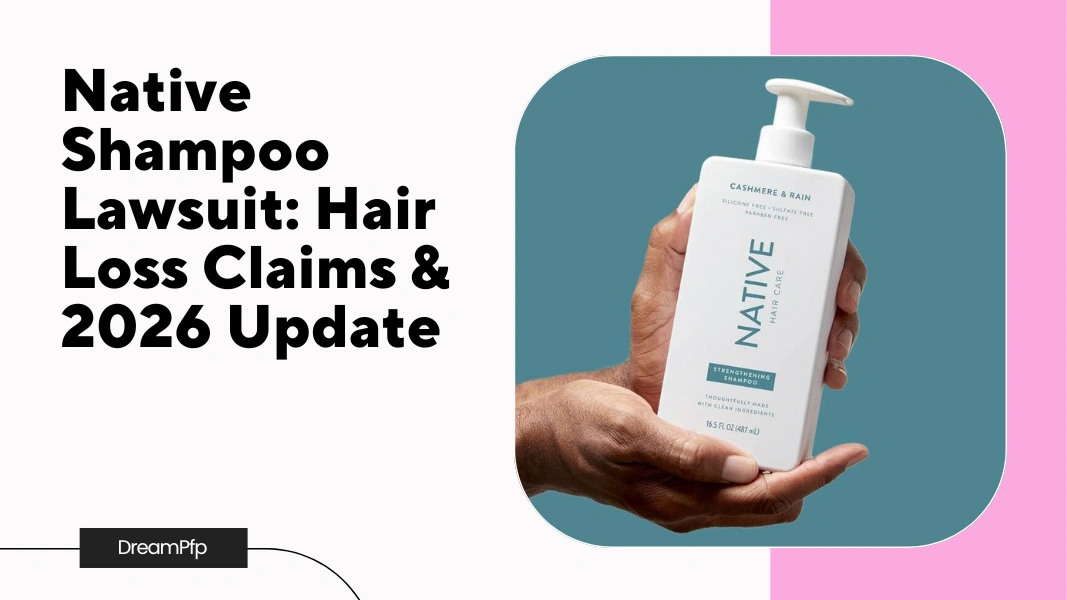
Native has become a widely recognized personal-care brand, including shampoos marketed around relatively simple formulations and ingredient-focused positioning. The Native Shampoo Lawsuit search has gained attention as consumers discuss alleged hair shedding, thinning, scalp irritation, and questions about product safety across reviews and social platforms.
Many people searching the term want to know whether a lawsuit has actually been filed, whether hair-loss complaints have been verified, whether a class action exists, and whether there is a settlement or compensation program. Those questions require separating online allegations from formal court proceedings.
As of August 2026, the clearest verified development is an earlier attorney investigation involving possible PFAS and Native’s marketing claims. That investigation is marked complete, and its public page does not identify a resulting Native shampoo class-action lawsuit.
Why Has the Native Shampoo Lawsuit Drawn National Attention?

Interest in the Native Shampoo Lawsuit comes from the overlap between a popular consumer brand, online hair-loss reports, and an attorney investigation involving Native personal-care products.
Attorneys working with ClassAction.org previously investigated whether certain Native products could contain PFAS despite marketing associated with “naturally derived” and “simple” ingredients. Products listed in that investigation included several Native shampoos and conditioners, along with deodorants, body washes, and toothpastes. The investigation is now labeled complete.
At the same time, consumers have posted their own experiences online. Some Reddit users describe increased shedding, dryness, itching, painful scalp symptoms, or thinning after beginning Native shampoo or conditioner. These reports have helped make the issue visible, but they are anecdotal reports rather than scientific findings or court-established facts.
That distinction matters. A consumer saying that hair loss started after using a shampoo does not, by itself, establish that the product caused the hair loss. Medical causation and legal liability require substantially stronger evidence.
Why Are Consumers Raising Hair Loss Concerns About Native Shampoo?
The complaints circulating online do not all describe the same experience. Some users report shedding, while others focus on dryness, irritation, breakage, or changes in how their hair feels.
Medical explanations can also complicate the picture. Hair shedding may be associated with hormonal changes, stress, nutritional issues, hereditary hair loss, medical conditions, medications, scalp disorders, or other hair-care practices. A temporal relationship between a new shampoo and shedding is therefore important to investigate, but it is not automatically proof of causation.
Excessive Hair Shedding
One of the most frequently discussed complaints is noticeably increased shedding during washing, brushing, drying, or styling.
Several Reddit users have described seeing substantially more hair than usual after switching to Native products. Some say the shedding appeared to improve after discontinuing the products, although individual reports vary considerably.
These experiences can help identify a potential pattern worth investigating. They cannot establish a general causal relationship between Native shampoo and hair loss without controlled evidence and evaluation of alternative causes.
Hair Thinning
Some consumers describe their hair as feeling or appearing thinner after weeks or months of use.
Hair thinning can result from actual follicular hair loss, increased shedding, breakage along the hair shaft, or a combination of factors. Distinguishing between these mechanisms can be important medically and legally.
A dermatologist may examine the scalp, hair shafts, shedding pattern, medical history, medications, hormonal factors, and laboratory results before determining the likely explanation.
Scalp Irritation
Itching, dryness, redness, soreness, bumps, and scalp discomfort also appear in some online discussions involving Native hair products. One Reddit account, for example, described itching, painful bumps, raw areas, and increased shedding after using a Native shampoo.
Irritation may potentially arise from sensitivity to fragrance or another ingredient, but the cause depends on the individual.
Evidence of irritation also does not necessarily establish that a product is defective. Courts generally require evidence connecting the particular product, alleged defect, and claimed injury.
Changes in Hair Texture
Other complaints concern dryness, tangling, brittleness, oiliness, or changes in texture.
A change in texture can sometimes make hair more susceptible to tangling and mechanical breakage. That can create the appearance of thinning even when hair follicles themselves are not being lost.
For this reason, a legally meaningful hair-loss allegation generally requires more than a consumer’s impression that their hair changed after switching products.
How Did the Native Shampoo Lawsuit Discussion Develop?
The phrase “Native Shampoo Lawsuit” can create the impression that one major hair-loss lawsuit is already moving through court. The documented history is more nuanced.
Consumer discussions about hair and scalp problems appeared online, while attorneys separately investigated whether certain Native products might raise PFAS-related marketing issues. The latter investigation included specific shampoos and conditioners but is now listed as complete.
Growing Online Reviews
Online communities played a significant role in spreading awareness.
Posts dating back several years describe users associating Native shampoo or conditioner with shedding, thinning, dryness, irritation, or breakage. Other consumers report satisfactory experiences, illustrating why online reviews alone cannot establish product-wide safety conclusions.
The number or intensity of complaints can justify further investigation. It does not substitute for clinical studies, adverse-event analysis, laboratory evidence, or court findings.
Legal Investigations
The most concrete legal development involved an investigation publicized by ClassAction.org.
Attorneys examined whether Native products possibly contained PFAS despite representations concerning naturally derived or simple ingredients. Coconut & Vanilla, Cucumber & Mint, Almond & Shea Butter, and Citrus & Herbal Musk shampoos were among the products identified on the investigation page.
Importantly, that page now states that the investigation is complete. An attorney investigation is not itself a lawsuit.
Increased Media Coverage
Legal-information websites, consumer blogs, Reddit discussions, and social-media posts subsequently amplified searches involving Native shampoo, PFAS, hair loss, and class actions.
Some online sources have made inconsistent claims about whether an active hair-loss lawsuit exists. That makes source verification especially important.
Consumers should look for an identifiable court, case number, complaint, docket, class-certification order, or official settlement administrator before treating an online statement as confirmation of litigation.
Continuing Consumer Questions
The discussion continues because several questions remain important to consumers:
- Can Native shampoo cause hair shedding?
- Was a lawsuit actually filed?
- Did the PFAS investigation prove contamination?
- Is there a class action?
- Has compensation been approved?
- Can consumers submit claims?
At present, the verified attorney-investigation page does not establish an active Native shampoo class action or settlement program.
What Are the Main Allegations in the Native Shampoo Lawsuit?
The allegations discussed online generally fall into two categories: alleged physical effects involving hair or scalp health and alleged marketing issues involving how Native products were represented.
These theories should not be treated as proven allegations in a single established shampoo lawsuit. Some arise from consumer reports, while the PFAS-related marketing concerns came from an attorney investigation that has since been completed.
Product Safety Concerns
Consumers have reported issues including increased shedding, scalp itching, dryness, irritation, and perceived thinning.
The existence of these complaints does not prove that Native shampoo is unsafe or that its formulation caused those symptoms.
Establishing a product-liability claim ordinarily requires evidence concerning the product, alleged defect, injury, and causal relationship between them.
Failure to Warn Allegations
A failure-to-warn theory generally argues that a manufacturer knew or should have known about a material risk but failed to provide an adequate warning.
For such an allegation to succeed, a claimant would typically need to identify the relevant risk and establish why a warning was legally required.
Online complaints alone would not establish that Native had a legal duty to warn consumers that its shampoo causes hair loss.
Marketing and Advertising Representations
Marketing was central to the earlier PFAS investigation.
The attorneys examined whether Native’s representations involving “naturally derived,” “simple,” or clean-oriented positioning could potentially mislead consumers if the identified products contained PFAS.
That investigation should not be interpreted as a finding that Native shampoo contained PFAS. An investigation evaluates whether evidence may support a legal claim; it is not a judicial determination.
Consumer Protection Claims
Consumer-protection litigation can focus on whether a reasonable purchaser was materially misled by packaging, advertising, labeling, or other representations.
Such cases may differ from personal-injury litigation. A plaintiff might allege an economic injury—for example, paying for a product based on a representation they say was misleading—without alleging physical injury.
Whether such a claim is viable depends on the applicable state law, the specific representation, evidence concerning the product, and the consumer’s purchasing decision.
Why Are Native Shampoo Hair Loss Claims Difficult to Prove?
Causation is one of the largest obstacles in hair-product litigation.
Hair loss has numerous possible causes. Genetics, hormonal changes, pregnancy, illness, stress, nutritional deficiencies, autoimmune disorders, medications, scalp conditions, styling practices, chemical treatments, and aging may all affect shedding or density.
A claimant therefore needs more than evidence showing that hair loss occurred after using a product. The legal question is whether credible evidence supports the conclusion that the product caused or materially contributed to the injury.
Timing can support a claim, particularly when symptoms begin after exposure and improve after discontinuation. But timing alone generally cannot eliminate alternative explanations.
This is also why medical documentation can be important. A dermatologist’s evaluation, diagnostic testing, photographs, medical history, product-use timeline, and evidence excluding competing causes may provide substantially more information than online reviews.
Current Status of the Native Shampoo Lawsuit
As of August 2026, consumers should be careful with websites describing a large active Native shampoo hair-loss class action as an established fact.
The strongest primary-source-style information located for the Native product controversy is the ClassAction.org investigation page. It says attorneys completed their investigation into whether specified Native products contained PFAS despite certain ingredient and marketing representations. The page does not announce a resulting lawsuit or settlement.
| Question | Current Verified Position |
|---|---|
| Native products investigated? | Yes, an attorney investigation included certain shampoos and conditioners |
| Investigation still recruiting? | No; the page states the investigation is complete |
| Hair-loss class certified? | No verified certification identified in the reviewed sources |
| Hair-loss liability established? | No verified court finding identified |
| Shampoo settlement announced? | No verified settlement identified |
| Official shampoo claim form? | No verified settlement claim process identified |
This status could change if new litigation is filed. For that reason, current court records and official settlement documents should take priority over social-media claims or recycled articles.
What Courts Typically Examine in Hair Product Lawsuits
Hair-product litigation may involve product liability, negligence, warranty claims, consumer-protection statutes, false advertising, or other theories depending on the allegations.
The evidence required varies by jurisdiction and claim. Four issues are particularly important.
Product Design
A design-defect claim generally asks whether something about the product’s formulation made it unreasonably dangerous under the applicable legal standard.
That analysis may involve ingredient concentrations, toxicology, formulation testing, manufacturing information, expert testimony, and foreseeable patterns of use.
A product causing irritation in an individual does not necessarily mean its design is legally defective.
Adequacy of Product Warnings
Courts may examine whether the manufacturer adequately disclosed known or reasonably foreseeable risks.
The analysis can include packaging, instructions, warnings, ingredient disclosures, and evidence about what the manufacturer knew at the relevant time.
A plaintiff may also need to show that a different warning would have affected the decision to purchase or use the product.
Medical Causation
Medical causation is often central to hair-loss claims.
Experts may need to determine whether the alleged exposure is scientifically capable of producing the claimed condition and whether it likely caused the particular plaintiff’s injury.
Alternative causes can become especially important when a claimant has hormonal changes, hereditary hair loss, nutritional deficiencies, medical conditions, or other relevant exposures.
Evidence of Hair or Scalp Damage
Objective documentation can make a significant difference.
Medical records, dermatological examinations, photographs, biopsy results when medically appropriate, prescriptions, laboratory testing, and treatment history can provide evidence beyond a consumer’s personal recollection.
The stronger the documentation connecting product use, symptom onset, and medical findings, the easier it becomes to evaluate causation.
Has There Been a Native Shampoo Lawsuit Settlement?
No verified Native shampoo hair-loss settlement has been identified in the sources reviewed for this August 2026 update.
The earlier PFAS-related investigation is marked complete rather than showing an approved class settlement.
That means consumers should be skeptical of pages suggesting there is currently a guaranteed Native shampoo payout, settlement check, or official compensation fund unless the information identifies an actual case and settlement administrator.
A legitimate class-action settlement typically has documentation explaining the court, case name, class definition, settlement terms, deadlines, exclusions, objections, and claim-submission procedure.
There is therefore no reliable basis at present for quoting an expected Native shampoo settlement amount. Any dollar figure presented without an actual settlement agreement would be speculative.
Could the Native Shampoo Lawsuit Become a Class Action?
A future class action is legally possible, but possibility should not be confused with current status.
A class action generally requires plaintiffs to file a lawsuit and later satisfy procedural requirements for class certification. Among other considerations, courts examine whether common issues can appropriately be resolved for the proposed group.
Hair-loss cases can create certification difficulties because causation may vary significantly between consumers. One person may experience irritation, another may experience breakage, and another may have an unrelated medical cause for shedding.
Marketing-based economic claims can sometimes present different class issues because they may focus more heavily on common representations and purchasing decisions than individualized physical injuries.
At present, however, consumers should not assume that purchasing Native shampoo automatically makes them a member of an existing hair-loss class.
Who May Potentially Qualify for a Native Shampoo Lawsuit?
There is currently no verified Native shampoo hair-loss settlement class with official eligibility criteria.
If individual litigation or a new class action were filed in the future, eligibility would depend on the allegations and legal requirements of that case.
Documented Product Purchase
Proof that the consumer actually purchased the relevant product can be fundamental.
Receipts, online order histories, loyalty-program records, credit-card statements, photographs, or retained packaging may help establish purchase.
The exact variety and purchase date may also matter because product formulations can change over time.
Consistent Product Usage
A claimant would ordinarily need to explain how the product was used.
Relevant information could include when usage began, how often the shampoo was used, whether conditioner or other products were used simultaneously, and when symptoms first appeared.
A detailed timeline can help evaluate whether the alleged relationship is plausible.
Medical Evidence
Medical documentation may help distinguish ordinary shedding or breakage from a diagnosed hair or scalp condition.
A dermatologist may consider competing explanations and document the severity and progression of symptoms.
Medical evidence is particularly important when compensation is sought for physical injury, treatment expenses, or significant hair loss.
Evidence of Hair or Scalp Damage
Photographs and clinical records may show how the condition changed over time.
Ideally, documentation should establish the person’s baseline condition before the alleged injury, progression during use, and condition after discontinuation.
That evidence still does not automatically prove causation, but it can make the underlying factual record more reliable.
What Evidence Can Strengthen a Native Shampoo Hair Loss Claim?
Anyone concerned about a potential product-related injury should preserve evidence rather than relying solely on memory.
Good documentation can also help a physician determine what happened, even if no legal claim ultimately follows.
Purchase Receipts and Records
Save physical receipts, digital receipts, order confirmations, retailer-account records, and relevant bank or credit-card entries.
These records may establish when and where the product was purchased.
If a receipt is unavailable, other documentation showing possession or purchase may still be useful.
Product Bottles and Packaging
Consumers considering a legal claim should generally avoid discarding the product at issue.
Packaging can identify the exact variety, ingredient list, size, lot information, UPC, labeling, and marketing representations present when it was purchased.
Those details can become important if formulations or labels change.
Before-and-After Photographs
Photographs can document visible changes in hair density, hairline appearance, scalp condition, redness, or irritation.
Images are most useful when they are dated and taken under reasonably consistent lighting and angles.
Photographs should supplement—not replace—medical evaluation when symptoms are significant.
Medical Records
Medical records can provide independent documentation of symptoms and diagnosis.
They may also identify alternative causes that have nothing to do with shampoo use. From an evidentiary standpoint, that information matters even when it weakens a proposed product-liability theory.
A credible legal assessment requires considering evidence both for and against causation.
How Has Native Responded to Consumer Hair Loss Concerns?
The public record reviewed for this article does not establish that Native or its parent company has admitted that Native shampoo causes hair loss.
That point is important because consumer allegations and company admissions are very different forms of evidence.
Native products continue to be sold, and recent mainstream consumer coverage includes positive user experiences with some Native shampoos. For example, 2026 coverage has discussed favorable reviews for Native’s volumizing and sensitive-series shampoos.
The existence of positive reviews does not disprove negative experiences, just as negative reviews do not establish that the products cause hair loss generally.
For legal purposes, a company’s liability would ultimately depend on admissible evidence, applicable law, and—if litigation proceeds—court findings or a negotiated resolution.
Can Consumers Still Report Native Shampoo Hair Loss?
Yes. Consumers who believe they experienced an adverse reaction can document and report what happened even though there is no verified settlement claim process.
The first priority should be health rather than litigation. Persistent shedding, inflammation, rash, scalp pain, or other significant symptoms warrant professional medical evaluation.
Consumers can also preserve:
- The shampoo and its packaging
- Lot or batch information
- Purchase records
- Photographs of symptoms
- Dates of product use
- Dates symptoms appeared
- Medical records and treatment expenses
A consumer report is not proof of causation, but systematically collected reports can help regulators, manufacturers, physicians, and researchers identify potential patterns that may warrant investigation.
Why Native Shampoo Lawsuit Discussions Continue to Grow
The controversy persists partly because the phrase “lawsuit” is being used online to describe several different things.
There was a documented attorney investigation involving Native products and potential PFAS-related marketing concerns. There are also numerous anecdotal discussions about hair shedding and scalp problems. But those facts do not automatically combine into a proven hair-loss class action.
Social-media repetition can further blur the distinction. One person may refer to an investigation as a lawsuit, another repeats the statement, and eventually the claim appears established even when no court filing is identified.
For consumers, the safest approach is straightforward: distinguish a complaint from an investigation, an investigation from a filed lawsuit, and a filed lawsuit from a certified class action or approved settlement.
Those stages carry very different legal meanings.
What Are Consumers Saying About Native Shampoo on Reddit and Other Online Communities?
Reddit contains a substantial range of experiences involving Native shampoo and conditioner.
Some users describe increased shedding, dryness, itching, scalp discomfort, breakage, or perceived thinning. Posts discussing these experiences appeared in hair-care communities in 2022, 2023, 2024, 2025, and 2026.
Others question whether shampoo is actually responsible. In some discussions, commenters point to allergies, sensitivities, hormones, diet, stress, postpartum changes, scalp conditions, or other possible explanations.
There is also misinformation within these discussions. Some Reddit posts state that a class action exists without providing a case number or court record. That illustrates why social-media discussions should be treated as anecdotal evidence rather than authoritative legal reporting.
Reddit is useful for understanding what consumers are discussing. It is not a substitute for medical research, court records, regulatory findings, or expert evidence.
How the Native Shampoo Lawsuit Compares With Other Hair Product Cases
Hair-product litigation commonly involves allegations of shedding, breakage, irritation, chemical exposure, inadequate warnings, or misleading advertising.
However, superficially similar complaints do not make different lawsuits legally equivalent.
Common Allegations Across Hair Product Lawsuits
Common theories can include:
- Defective product formulation
- Undisclosed or allegedly harmful ingredients
- Inadequate safety warnings
- Misleading advertising
- Breach of warranty
- State consumer-protection violations
- Negligence
- Personal injury
The viability of each theory depends on the actual evidence and applicable law.
A successful lawsuit involving one shampoo brand also does not prove that another manufacturer’s product has the same defect.
Scientific Evidence and Medical Causation
Scientific causation is often the dividing line between widespread complaints and sustainable product-liability litigation.
Plaintiffs may need qualified experts to address whether an ingredient or formulation can produce the alleged injury at realistic exposure levels.
They may also need individualized medical evidence showing that the product probably caused their particular condition.
This becomes difficult with hair loss because many unrelated conditions can produce similar symptoms.
What Should Consumers Do If They Experience Hair Loss?
Anyone experiencing sudden or significant hair loss should focus first on identifying the medical cause.
It can be tempting to assume that the newest shampoo, supplement, medication, or lifestyle change is responsible. That assumption may be correct in some circumstances, but professional evaluation can help identify other explanations.
Stop Using the Product if Appropriate
If a product appears to cause irritation or another adverse reaction, discontinuing it may be reasonable.
Medical guidance is especially appropriate when symptoms are severe or persistent.
Keep the bottle instead of immediately throwing it away if there is any possibility that the product or its labeling may later need to be examined.
Schedule a Medical Evaluation
A dermatologist or other qualified healthcare professional can assess hair shedding and scalp symptoms.
The evaluation may consider hereditary hair loss, telogen effluvium, nutritional deficiencies, hormonal changes, dermatological conditions, medications, illness, or allergic and irritant reactions.
This helps protect the consumer’s health while creating a more reliable record of what occurred.
Preserve Product and Purchase Documentation
Keep receipts, packaging, product photographs, lot numbers, online orders, and relevant communications.
Write down when use began and when symptoms appeared.
Contemporaneous documentation is generally more reliable than trying to reconstruct the timeline months later.
Monitor Hair Recovery
Document what happens after discontinuing the product.
Consistent photographs and medical follow-ups may show whether shedding improves, remains unchanged, or worsens.
Improvement after discontinuation may be relevant information, but it should still be interpreted alongside other medical evidence.
Latest Native Shampoo Lawsuit Update
As of August 2026, the verified legal picture remains substantially narrower than some online headlines suggest.
Attorneys previously investigated certain Native shampoos, conditioners, and other personal-care products over potential PFAS-related marketing concerns. The ClassAction.org page now explicitly labels that investigation complete. It does not announce an approved Native shampoo settlement or an active claimant-recruitment process.
Meanwhile, hair-loss and scalp-irritation discussions remain active online, including consumer posts published in 2026. These reports show continuing concern but do not constitute a judicial finding that Native shampoo causes hair loss.
No verified court order reviewed for this article establishes a certified Native shampoo hair-loss class, and no official shampoo settlement claim process has been identified.
Consumers should therefore be cautious with websites claiming a specific payout amount or suggesting compensation is already guaranteed.
Key Takeaways About the Native Shampoo Lawsuit
The Native Shampoo Lawsuit discussion contains a mixture of legitimate consumer concerns, a documented legal investigation, and unverified online claims.
The most important points are:
- Consumers have reported hair shedding, thinning, dryness, breakage, and scalp irritation online.
- These reports are allegations and personal experiences, not proof that Native shampoo causes hair loss.
- Attorneys investigated certain Native products over possible PFAS and marketing issues.
- That investigation is now marked complete.
- No verified Native shampoo hair-loss settlement has been identified.
- No official settlement claim form or established shampoo payout has been identified.
- Hair-loss causation can be difficult to prove because numerous medical and environmental factors can produce similar symptoms.
- Consumers experiencing significant symptoms should seek medical evaluation and preserve relevant documentation.
The legal status should be reassessed if a new complaint, class-certification decision, regulatory action, or settlement is announced.
Read: Vital Proteins Lawsuit
Read: SheaMoisture Lawsuit
Read: Capital Vacations Class Action Lawsuit
Read: Prose Hair Lawsuit
Read: Revive Essential Oils Lawsuit
Read: Dan Survivor 39 Lawsuit
Read: Tax Rise Lawsuit
Read: NetVideoGirls Lawsuit
Read: Credit One Bank Class Action Settlement
Read: Ryze Superfoods Lawsuit
FAQs
Is there currently a Native Shampoo lawsuit?
There is no verified active, certified Native shampoo hair-loss class action identified in the sources reviewed for this August 2026 update. Attorneys previously investigated certain Native products over potential PFAS and marketing concerns, but that investigation is now marked complete.
Does Native Shampoo cause hair loss?
A causal relationship has not been established by the court evidence reviewed here. Some consumers report shedding, thinning, dryness, and scalp irritation after using Native products, but hair loss has many potential causes.
Was Native Shampoo investigated for PFAS?
Yes. An attorney investigation covered several Native shampoos and other personal-care products and examined possible PFAS-related concerns alongside Native’s ingredient and marketing representations. The investigation page now states that the matter is complete.
Has a Native Shampoo settlement been reached?
No verified Native shampoo hair-loss settlement or official settlement fund was identified in the reviewed sources. Consumers should not assume they are entitled to compensation based solely on websites or social-media posts discussing a possible lawsuit.
Is there a Native Shampoo class action claim form?
No verified official Native shampoo hair-loss settlement claim form has been identified. A legitimate settlement claim process would normally identify the underlying case, court, settlement administrator, eligibility requirements, deadlines, and court-approved settlement documents.
What complaints have consumers made about Native Shampoo?
Online users have reported increased shedding, thinning, dryness, itching, scalp irritation, breakage, and changes in hair texture. These experiences vary between consumers and remain anecdotal unless supported by medical, scientific, or legal evidence.
What should I do if I believe Native Shampoo damaged my hair?
Consider discontinuing the product if appropriate, preserve the bottle and purchase records, photograph changes, document your usage timeline, and obtain medical evaluation for persistent or significant symptoms. A healthcare professional can also investigate alternative causes of hair loss.
Could consumers receive compensation in the future?
Potentially, but only if future litigation, an individual claim, or another legal resolution establishes a basis for compensation. There is currently no verified Native shampoo settlement amount that can responsibly be quoted.
Final Thoughts
The Native Shampoo Lawsuit discussion is best understood as a combination of consumer hair-loss complaints and an earlier attorney investigation involving potential PFAS and marketing issues—not as proof of an established nationwide hair-loss case.
Consumers have genuinely reported shedding, thinning, irritation, and other problems online. Those experiences should not be dismissed, but they also do not establish that Native shampoo caused those conditions. The documented PFAS-related investigation is marked complete, and the reviewed sources do not establish an approved shampoo settlement or certified hair-loss class action.
Anyone experiencing significant hair or scalp problems should prioritize medical evaluation, preserve the product and purchase documentation, and avoid relying on social-media claims about guaranteed payouts. Future legal developments should be judged by actual court filings, regulatory records, and official settlement documents rather than speculation.
