
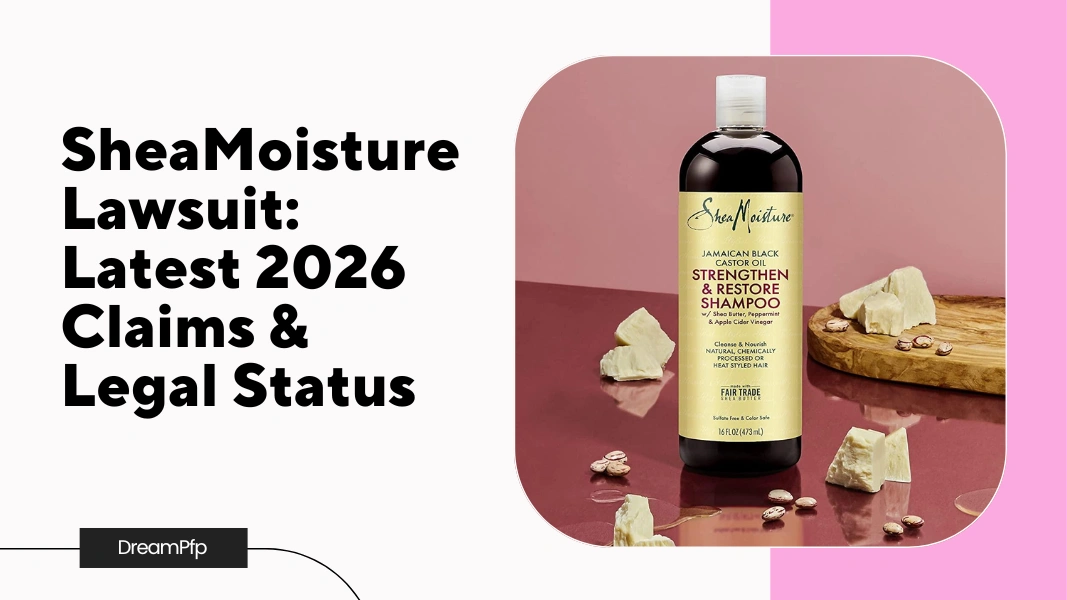
SheaMoisture is a widely recognized hair and personal-care brand, particularly known for products designed for textured, curly, and natural hair. Searches for the SheaMoisture lawsuit have grown as consumers look for information about product ingredients, formula changes, hair-related complaints, and allegations involving product marketing.
Some searches also focus on whether a class action exists, whether SheaMoisture has reached a settlement, and whether consumers experiencing hair loss or scalp problems may qualify for compensation. These questions should not be treated as interchangeable because consumer complaints and formal court claims are different things.
As of August 2026, there is a recently filed federal proposed class action involving certain “100% Virgin Coconut Oil” representations, along with older litigation involving hair-growth advertising. This article separates those documented proceedings from online complaints and unverified claims.
Understanding the SheaMoisture Lawsuit

The phrase “SheaMoisture lawsuit” can refer to more than one legal controversy. One documented case dates to 2016, when plaintiffs brought a proposed class action against Sundial Brands LLC and Nubian Heritage over representations that certain SheaMoisture and Nubian Heritage products could promote hair growth. The plaintiffs voluntarily dismissed their claims in August 2016.
More recently, plaintiff Ruffina Yuryeva filed a federal lawsuit against Sundial Brands LLC on June 11, 2026. The case, Yuryeva v. Sundial Brands LLC, No. 2:26-cv-06387, was filed in the U.S. District Court for the Central District of California.
The 2026 complaint challenges labeling associated with certain SheaMoisture products carrying “100% Virgin Coconut Oil” language. The plaintiff alleges the representation can mislead shoppers into believing virgin coconut oil is the exclusive, predominant, or defining ingredient when other ingredients are present and may appear in greater proportions. These remain allegations rather than judicial findings.
| Question | Current Information |
|---|---|
| Is there a 2026 lawsuit? | Yes, a proposed federal class action was filed |
| Filing date | June 11, 2026 |
| Defendant | Sundial Brands LLC |
| Main 2026 issue | Allegedly misleading “100% Virgin Coconut Oil” labeling |
| Has liability been established? | No |
| Confirmed settlement? | No verified final settlement identified in the cited court record |
| Earlier class action? | Yes, a 2016 hair-growth advertising case was voluntarily dismissed |
What Prompted Legal Attention Around SheaMoisture?
Legal attention surrounding SheaMoisture has developed from several distinct issues rather than one continuous lawsuit. Advertising representations, ingredient descriptions, product formulas, and consumer expectations have all contributed to online discussion.
The distinction matters. A customer saying that a shampoo dried out their hair is a consumer experience. A plaintiff alleging that packaging violates a consumer-protection statute is a legal claim requiring evidence and judicial review.
Consumer Ingredient Concerns
Consumers increasingly examine ingredient lists when purchasing shampoos, conditioners, masks, and scalp products. Ingredients can influence purchasing decisions, especially when packaging emphasizes terms such as coconut oil, shea butter, natural ingredients, or particular botanical components.
The 2026 lawsuit specifically illustrates how ingredient-related concerns can become a legal labeling issue. The plaintiff alleges that prominent “100% Virgin Coconut Oil” wording creates a misleading impression about the composition of certain products.
That allegation does not establish that the products are unsafe. The legal question reported in the case is primarily about how reasonable consumers may understand the labeling and whether they paid a price premium because of the challenged representation.
Formula Changes
Formula changes have also generated discussion among SheaMoisture customers. The company itself acknowledges in its FAQ that some shampoo formulations have changed, while stating that most formulations have not. It also explains that ingredient lists can differ between markets because of local labeling requirements.
Online users sometimes attribute changes in texture, scent, dryness, or hair response to reformulations. Those accounts can identify areas worth investigating, but they do not prove that a formula is defective or that a particular ingredient caused an injury.
Consumers concerned about a reformulation should compare the ingredient list on their current container with an older package rather than relying solely on social-media claims.
Marketing and Advertising Claims
Product marketing becomes legally significant when plaintiffs argue that a representation could materially influence purchasing decisions.
That was central to the 2016 litigation. The proposed class action alleged that certain SheaMoisture and Nubian Heritage products were promoted in ways suggesting they could stimulate hair growth when, according to the plaintiff, they could not. The claims were voluntarily dismissed shortly afterward.
The 2026 litigation follows a different theory. Rather than focusing primarily on hair growth, it challenges how certain products are represented through “100% Virgin Coconut Oil” wording.
Who Owns SheaMoisture?
SheaMoisture originated under Sundial Brands, which was founded in 1991 and built a substantial presence in hair and personal care, particularly among consumers of color.
In November 2017, Unilever announced an agreement to acquire Sundial Brands. SheaMoisture was among the brands included in the transaction.
SheaMoisture currently describes itself as Black-founded and Black-led, noting that it operates within a larger corporate structure.
This ownership structure can create confusion in lawsuit searches. Court cases involving SheaMoisture products may formally name Sundial Brands LLC rather than simply listing “SheaMoisture” as the defendant. That is the situation in the 2026 Yuryeva case.
Corporate ownership also should not be used to assume that litigation involving another Unilever brand automatically applies to SheaMoisture. Each lawsuit has its own defendants, products, factual allegations, and legal theories.
Was There a SheaMoisture Class Action Lawsuit?
Yes. There is documented class-action litigation involving SheaMoisture products.
In July 2016, a proposed class action was filed against Sundial Brands and Nubian Heritage. The plaintiff alleged that certain products were misleadingly marketed as capable of promoting hair growth. According to Truth in Advertising’s case archive, the named plaintiffs voluntarily dismissed their claims in August 2016, and the reason was not publicly disclosed there.
A separate proposed class action was filed on June 11, 2026. The federal docket identifies Ruffina Yuryeva as plaintiff and Sundial Brands LLC as defendant. The case is No. 2:26-cv-06387 in California federal court.
The current complaint alleges that “100% Virgin Coconut Oil” representations on certain SheaMoisture products are misleading because coconut oil is allegedly neither the only ingredient nor the predominant ingredient. The plaintiff asserts California consumer-protection claims.
Calling this a proposed or putative class action is important. Filing a class-action complaint does not mean a court has certified a class, determined that the allegations are true, or awarded compensation.
What Were the Main Allegations Against SheaMoisture?
The allegations associated with SheaMoisture have varied considerably depending on the case and time period. They should therefore be evaluated separately rather than combined into a single narrative.
Documented litigation has principally involved advertising and product representations. Hair damage and hair loss, meanwhile, also appear in consumer reviews and complaints, but those individual reports do not establish product-wide causation.
Product Representation
The clearest current legal allegation concerns product representation.
The 2026 plaintiff argues that “100% Virgin Coconut Oil” wording communicates more than simply the purity of the coconut oil ingredient. According to the complaint as summarized by legal reporting, a reasonable purchaser could allegedly interpret the wording as indicating that virgin coconut oil is the product’s exclusive, predominant, or defining ingredient.
Sundial Brands has not been found liable merely because this allegation was filed. The court process must determine whether the claims can proceed and, ultimately, whether the plaintiff can establish the required elements.
Ingredient Transparency
Ingredient transparency is closely connected to the 2026 labeling allegations.
The complaint reportedly points to ingredient lists on the back of the relevant products as evidence that the formulations contain additional ingredients and are not wholly or predominantly virgin coconut oil.
SheaMoisture separately explains that ingredient labels can differ between jurisdictions because European and UK regulations may require additional allergens or carry-over ingredients to be disclosed. The company says those differences do not necessarily indicate that a formulation itself has changed.
Consumers should therefore evaluate the ingredient list for the specific product and market in which it was purchased.
Hair Damage and Hair Loss Claims
Hair loss is one of the most sensitive topics appearing in searches around SheaMoisture. Some consumers have publicly reported shedding, dryness, breakage, irritation, or other unwanted hair and scalp changes after using particular products.
For example, the Better Business Bureau displays a consumer complaint alleging significant hair loss after using SheaMoisture shampoo and conditioner. BBB expressly cautions that it does not verify the accuracy of information supplied by third parties.
Such reports should therefore be described as consumer allegations, not medical or legal findings.
Importantly, the documented 2026 Yuryeva class action concerns allegedly misleading coconut-oil labeling—not a judicial finding that SheaMoisture causes hair loss.
Has SheaMoisture Been Found Liable in Court?
The existence of a lawsuit does not mean SheaMoisture or Sundial Brands has been found legally responsible for the allegations.
The 2016 hair-growth case ended when the named plaintiffs voluntarily dismissed their claims. A voluntary dismissal is not the same as a court ruling that the challenged advertising was unlawful.
Likewise, the 2026 Yuryeva complaint is a recently filed case. The publicly indexed docket confirms the complaint and related opening documents, but those filings are allegations presented by the plaintiff. Justia specifically notes that docket filings should not be treated as findings of fact or liability.
Consumers should be cautious with websites or social-media posts that convert “a lawsuit was filed” into “the company lost a lawsuit.” Those are materially different legal statements.
A finding of liability generally requires a judgment, verdict, or other binding determination. A defendant can also settle litigation without admitting wrongdoing. Neither outcome should be assumed simply from the filing of a class-action complaint.
Is SheaMoisture Safe to Use?
There is no single answer that applies to every SheaMoisture product or every consumer. The brand sells numerous shampoos, conditioners, treatments, oils, styling products, and personal-care formulations, each with different ingredients and intended uses.
A pending labeling lawsuit also should not automatically be interpreted as evidence that the products are unsafe. The documented 2026 case challenges the presentation of certain “100% Virgin Coconut Oil” products rather than establishing that SheaMoisture’s entire portfolio poses a health hazard.
Individual sensitivity can vary substantially. Fragrance, botanical extracts, essential oils, surfactants, preservatives, proteins, or other ingredients may work well for one consumer while irritating another.
Consumers who experience persistent burning, rash, severe scalp irritation, unexpected hair loss, or another significant reaction should stop using the suspected product and consider seeking medical evaluation. Keeping the container, ingredient list, purchase receipt, photographs, and relevant medical records may also be useful if a serious reaction later becomes the subject of a complaint or legal claim.
Is SheaMoisture Healthy for Your Hair?
Whether SheaMoisture works well depends on the particular formula, hair type, scalp condition, styling routine, and individual sensitivity.
Some people use SheaMoisture products for moisture retention, curl definition, conditioning, strengthening, or scalp care. Others report that certain formulas leave their hair dry, heavy, brittle, or irritated. Neither type of individual experience proves what will happen to every consumer.
Product compatibility can also change when formulations change. SheaMoisture acknowledges that some shampoo formulas have been updated, making it reasonable for long-time users to periodically check ingredient labels rather than assuming a newly purchased bottle is identical to an older version.
Hair shedding also has many possible causes unrelated to cosmetics. Consequently, a temporal connection—such as noticing shedding after starting a shampoo—does not by itself establish medical causation.
For consumers with recurring scalp problems or substantial unexplained hair loss, professional evaluation is generally more reliable than attempting to diagnose the cause through product reviews alone.
Popular SheaMoisture Products Frequently Discussed
SheaMoisture’s extensive product portfolio is one reason online discussions can become confusing. An experience involving one formula should not automatically be attributed to every shampoo, conditioner, mask, mist, or treatment carrying the brand name.
Product names and formulations may also change over time or differ by market. Consumers investigating a possible reaction should identify the exact product and preferably retain the ingredient label and lot information.
SheaMoisture Moisturizing Shampoo
Moisturizing shampoos are among SheaMoisture’s best-known haircare offerings. Different lines target concerns such as dryness, curls, damaged hair, scalp care, or moisture retention.
Because shampoo formulations vary, consumers should not assume that an ingredient found in one SheaMoisture shampoo appears in every other version.
The company has confirmed that some shampoo formulas have been updated. Anyone returning to a product after several years may therefore want to compare the current ingredient list with the formulation they previously used.
SheaMoisture Leave-In Conditioner
Leave-in conditioners remain on the hair longer than rinse-out products, making ingredient compatibility particularly important for people with sensitive scalps or skin.
Consumers commonly use leave-in formulas to improve moisture, manageability, detangling, and curl definition. However, the ideal amount and formulation depend heavily on hair density, porosity, texture, and other products used in the same routine.
A negative experience with a leave-in conditioner is not itself proof of a defective product. Persistent irritation or unusual shedding should nevertheless be taken seriously and evaluated rather than repeatedly exposing the scalp to a suspected trigger.
SheaMoisture Hair Masks
Hair masks are generally designed to provide more intensive conditioning than everyday conditioners. SheaMoisture offers multiple masks formulated around different oils, butters, proteins, and botanical ingredients.
Consumer reviews of intensive treatments can vary considerably because hair needs differ. A rich mask may benefit very dry hair while leaving finer or differently conditioned hair feeling coated or weighed down.
Consumers concerned about formula changes should examine current packaging rather than relying on older online ingredient lists. This is especially relevant because product formulations and regional labeling can evolve.
SheaMoisture Hold and Shine Moisture Mist
Styling mists are generally used to refresh, hydrate, or improve the appearance of styled hair. As with other leave-on products, consumers should follow the directions and review the ingredient list if they have known sensitivities.
Reports about another SheaMoisture product should not automatically be applied to this mist. Legal allegations must be tied to the specific products and representations identified in a complaint.
That product-specific distinction becomes especially important when discussing class actions, because a proposed class may be defined around particular purchases rather than the entire brand.
SheaMoisture Amla Products
Amla is a botanical ingredient traditionally used in hair and beauty preparations. SheaMoisture has incorporated amla into certain product lines and formulations.
The presence of a botanical ingredient does not guarantee that a product will work equally well for everyone. Consumers should consider the entire ingredient list rather than focusing solely on the highlighted ingredient on the front label.
This broader principle also illustrates why ingredient-based advertising can become legally significant: courts may need to consider the overall impression created by packaging rather than one isolated word.
SheaMoisture Dandruff Products
Products marketed for dandruff or scalp care deserve particular attention because dandruff-like symptoms can have different causes.
Dryness, irritation, product buildup, seborrheic dermatitis, allergic reactions, and other scalp conditions may produce overlapping symptoms. A cosmetic product that helps one condition may therefore be inappropriate for another.
Consumers experiencing persistent flaking, inflammation, sores, severe itching, or hair loss should consider professional assessment instead of continuously switching products based solely on online recommendations.
How Do SheaMoisture Reviews Compare With Lawsuit Claims?
Consumer reviews and lawsuit allegations serve different purposes.
Reviews describe personal experiences. They may report improved moisture and curl definition, or problems such as dryness, irritation, breakage, shedding, fragrance changes, or dissatisfaction with a reformulated product. Those accounts can be useful when identifying recurring consumer concerns.
A lawsuit, however, must assert legally recognized claims and ultimately support them with evidence. In the current 2026 case, the central allegation concerns whether “100% Virgin Coconut Oil” representations are misleading—not whether every purchaser experienced hair damage.
This distinction prevents two common mistakes. Positive reviews do not disprove a potentially valid labeling claim, and negative reviews do not independently prove that a company violated the law.
Consumers researching the SheaMoisture lawsuit should therefore prioritize actual docket information and reputable legal reporting for case status. Reviews are better used to understand individual experiences rather than to determine whether liability, settlement eligibility, or medical causation has been established.
How Cosmetic and Haircare Lawsuits Typically Develop
Haircare and cosmetic litigation often begins when one or more consumers allege that a product’s labeling, advertising, safety warnings, ingredients, or performance differs materially from what purchasers were led to expect.
A proposed class action may then move through several procedural stages:
- A plaintiff files a complaint identifying alleged legal violations.
- The defendant may answer or seek dismissal.
- The parties can exchange evidence through discovery if the case proceeds.
- Plaintiffs may request class certification.
- The court determines whether the requirements for class treatment are satisfied.
- The parties may negotiate a settlement or continue toward trial.
- If a class settlement occurs, court approval and notice procedures usually follow.
Not every case reaches each stage.
Some complaints are dismissed early. Others are voluntarily withdrawn, as happened with the 2016 SheaMoisture hair-growth case.
This process is why consumers should be skeptical when a recently filed lawsuit is immediately described online as a “settlement.” A complaint, certified class action, proposed settlement, approved settlement, and final judgment are separate legal events.
What Should Consumers Know Before Buying SheaMoisture Products?
Consumers do not need to treat every lawsuit allegation as a reason to avoid an entire brand. A more practical approach is to evaluate the specific product being considered.
Before purchasing or using a product, consumers can:
- Read the complete ingredient list on the current package.
- Check whether the formula has changed since a previous purchase.
- Follow directions and patch-test when appropriate.
- Stop use if significant irritation or another adverse reaction develops.
- Keep packaging and receipts after a serious reaction.
- Avoid assuming that a complaint about one product applies to every SheaMoisture formula.
- Verify lawsuit information through court records or credible legal sources.
Consumers should also distinguish marketing terminology from the complete formulation.
The 2026 lawsuit demonstrates why that distinction matters. The plaintiff’s theory is that prominent front-label wording allegedly creates an impression inconsistent with the product’s overall ingredient composition. Whether that theory succeeds is a matter for the litigation process.
Can Consumers Receive Compensation From a SheaMoisture Lawsuit?
There is currently no basis to assume that every SheaMoisture customer is entitled to compensation.
The 2016 proposed class action concerning hair-growth advertising was voluntarily dismissed, so consumers should not expect a payout from that case based simply on having purchased SheaMoisture products.
The 2026 Yuryeva case is different. It is a proposed class action concerning allegedly misleading “100% Virgin Coconut Oil” representations. Filing the case does not automatically create a compensation program.
A legitimate claims process would ordinarily follow a settlement or judgment and include defined eligibility requirements, covered products, purchase periods, deadlines, and instructions.
Consumers should be cautious with third-party pages claiming that money is already available unless those claims can be matched to official court-approved settlement information.
If a settlement is eventually proposed, the court documents should explain who qualifies, what documentation is required, the available benefits, and how claims must be submitted.
Latest SheaMoisture Lawsuit Update
The most significant current development is the June 11, 2026 filing of Yuryeva v. Sundial Brands LLC, No. 2:26-cv-06387, in the U.S. District Court for the Central District of California.
The proposed class action alleges that certain SheaMoisture products marketed with “100% Virgin Coconut Oil” wording mislead consumers because virgin coconut oil is allegedly not the exclusive or predominant ingredient. The plaintiff asserts consumer-protection claims involving the way the products were represented.
At this stage, the allegations should not be reported as proven facts. The publicly indexed docket confirms the filing but does not establish liability.
There is also no reliable basis in the cited court record for describing the case as a finalized settlement or announcing a guaranteed payout to consumers.
Anyone following the litigation should watch for substantive docket developments such as a response to the complaint, dismissal motion, class-certification proceedings, settlement filings, or judicial orders.
Could Future SheaMoisture Lawsuits Be Filed?
Yes. Like any major consumer-products company, Sundial Brands could face additional litigation if consumers believe particular products, representations, or business practices violate applicable law.
That possibility does not mean another lawsuit is inevitable or that current consumer complaints will become viable legal claims.
Future cases could theoretically involve advertising, ingredient representations, product performance, allergic reactions, or other consumer-protection questions. Plaintiffs would still need to establish the factual and legal elements applicable to their claims.
Hair-damage allegations can be particularly complex. A consumer may need evidence connecting the specific product to the alleged injury while accounting for other potential causes of shedding, breakage, or scalp irritation.
For class litigation, plaintiffs also face additional procedural requirements. They must generally demonstrate that the proposed group satisfies the applicable rules for class certification. A collection of similar social-media complaints alone does not create a legally recognized class action.
What the Future Could Hold for SheaMoisture
The 2026 litigation may provide additional guidance about how courts evaluate prominent ingredient-based claims on cosmetic and personal-care packaging.
Several outcomes remain possible. The case could face dismissal motions, continue into discovery, reach class-certification proceedings, settle, or proceed further through litigation. Predicting the result at this early stage would be speculative.
The broader issue also extends beyond SheaMoisture. Ingredient-focused branding has become common throughout the beauty industry, making the distinction between a highlighted ingredient and the complete product formulation increasingly important in consumer-protection litigation.
For SheaMoisture, future developments will depend primarily on what happens in the federal court record rather than on the volume of online discussion.
Consumers should therefore distinguish verified procedural developments from headlines suggesting that a settlement or payout already exists.
Read: Symmetry Financial Group Lawsuit
Read: Chobani Yogurt Lawsuit 2026
Read: Zoloft While Breastfeeding Lawsuit
Read: Vegamour Lawsuit
Read: RPM Living Lawsuit
Read: Dan Survivor 39 Lawsuit
Read: Tax Rise Lawsuit
Read: NetVideoGirls Lawsuit
Read: Credit One Bank Class Action Settlement
Read: Ryze Superfoods Lawsuit
FAQs
Is there currently a SheaMoisture lawsuit?
Yes. A proposed class action was filed against Sundial Brands LLC in California federal court on June 11, 2026. The plaintiff challenges “100% Virgin Coconut Oil” representations on certain SheaMoisture products. The allegations have not been established as fact by the court.
Was there a SheaMoisture hair growth lawsuit?
Yes. A proposed class action filed in 2016 alleged that certain SheaMoisture and Nubian Heritage products were misleadingly marketed as promoting hair growth. The named plaintiffs voluntarily dismissed their claims in August 2016, according to the available case archive.
Does the SheaMoisture lawsuit claim its products cause hair loss?
The current 2026 case identified here is primarily a product-labeling and consumer-protection dispute involving “100% Virgin Coconut Oil” representations. Some consumers separately report hair loss or breakage online, but those reports should not be confused with a court finding that SheaMoisture products cause hair loss.
Who owns SheaMoisture now?
SheaMoisture is part of Sundial Brands. Unilever announced its acquisition of Sundial Brands in 2017, a portfolio that included SheaMoisture, Nubian Heritage, Madam C.J. Walker, and nyakio.
Can I join the SheaMoisture class action?
Not simply because you purchased a SheaMoisture product. Whether consumers ultimately become members of a class depends on how the case develops, whether a class is certified or a settlement class is proposed, and the specific products, purchase periods, locations, and other criteria ultimately established.
What should I do if I experienced hair loss after using SheaMoisture?
Consider stopping the suspected product and seeking appropriate medical evaluation if the hair loss is significant or persistent. Preserve the bottle, ingredient label, lot information, receipts, photographs, correspondence with the company, and relevant medical documentation. Those records can help establish what product was used and what happened.
Is there a SheaMoisture lawsuit claim form?
A newly filed proposed class action does not automatically create an official claim form. A legitimate claims process normally follows a court-approved settlement and includes formal notice, eligibility criteria, deadlines, and administrator information. Be cautious with websites that imply an immediate guaranteed payout.
Final Thoughts
The SheaMoisture lawsuit search now covers both historical and current legal issues. A 2016 proposed class action challenged hair-growth advertising but was voluntarily dismissed. More importantly for current searches, a new proposed class action was filed in June 2026 challenging “100% Virgin Coconut Oil” representations on certain SheaMoisture products.
The current allegations have not been proven, and the filing itself does not establish that Sundial Brands is liable or that consumers are automatically entitled to compensation. Separate reports involving hair loss, dryness, breakage, or irritation should likewise be described as consumer experiences unless supported by medical or judicial findings.
Consumers following the case should rely on court records for major developments and treat settlement or payout claims cautiously until an official process exists. Legal outcomes ultimately depend on evidence, procedural rulings, applicable consumer-protection law, and decisions made by the court.
