
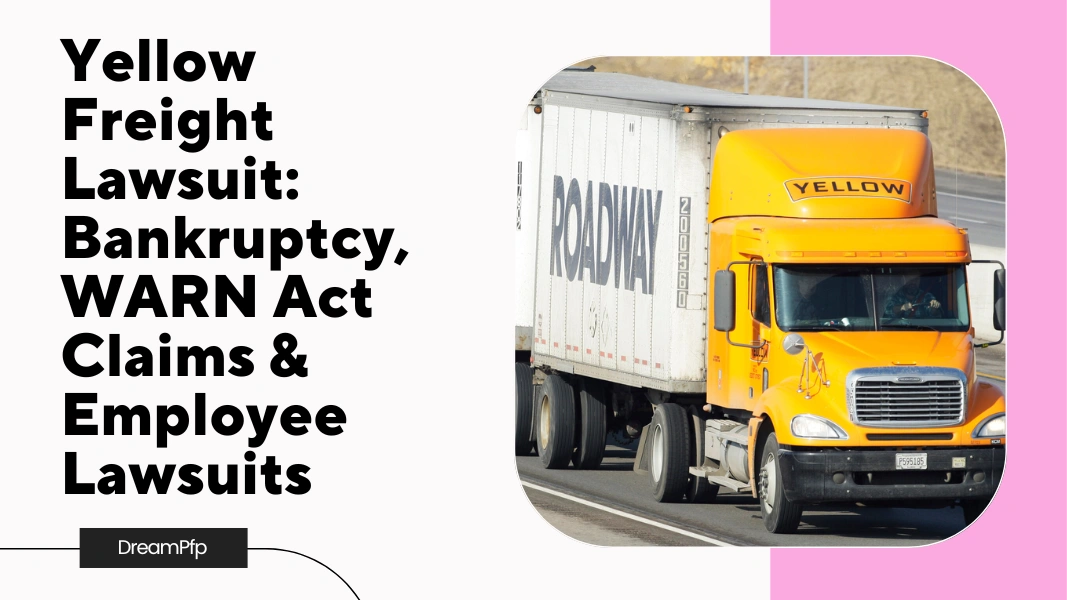
Yellow Freight, formerly one of the largest less-than-truckload (LTL) carriers in the United States, became the center of widespread legal attention after filing for Chapter 11 bankruptcy in August 2023. Since then, the Yellow Freight lawsuit has become a common search term as former employees, creditors, and industry observers seek answers about legal claims, compensation, and the company’s bankruptcy proceedings.
Many people are searching to understand whether a class action lawsuit exists, if WARN Act violations could result in compensation, and whether bankruptcy will affect employee claims. Questions about settlements, payout timelines, and the company’s remaining assets continue to generate significant interest.
This article explains the current legal situation, separates confirmed facts from ongoing claims, and outlines what former employees and creditors should know as court proceedings continue.
Why Is Yellow Freight Facing Lawsuits?

Yellow Corporation’s legal troubles began long before its bankruptcy filing but intensified after the company abruptly ceased operations and laid off approximately 30,000 employees in 2023. The sudden shutdown led to numerous legal disputes involving employees, creditors, shareholders, and other parties with financial interests in the company.
One of the most widely discussed issues involves allegations that employees were terminated without receiving the advance notice generally required under the federal Worker Adjustment and Retraining Notification (WARN) Act. Several lawsuits argue that workers should have received at least 60 days’ notice or equivalent compensation before the mass layoffs occurred.
At the same time, Yellow’s bankruptcy introduced additional legal disputes over unpaid debts, contractual obligations, and the distribution of company assets. These proceedings are being handled through the federal bankruptcy court rather than through a single lawsuit.
Key legal issues include:
- Alleged WARN Act violations.
- Employee wage and benefit claims.
- Bankruptcy-related creditor disputes.
- Asset sale disagreements.
- Contract and financial obligations.
Importantly, these claims remain subject to court review. Allegations presented in lawsuits do not establish legal liability unless supported by court findings or settlements.
Understanding the Yellow Freight Legal Disputes
The legal matters involving Yellow Freight are more complex than many headlines suggest. Rather than involving one nationwide lawsuit, the company’s legal issues consist of multiple proceedings arising from different legal obligations and financial relationships.
Former employees have pursued claims relating to layoffs, while creditors have filed claims seeking repayment of outstanding debts. Other proceedings concern the sale of company assets, contractual disputes, and the administration of the bankruptcy estate.
The following table summarizes the primary legal matters currently associated with Yellow.
| Legal Issue | Current Status |
|---|---|
| WARN Act claims | Pending through court proceedings |
| Bankruptcy case | Ongoing under Chapter 11 |
| Employee wage claims | Subject to bankruptcy process |
| Creditor repayment | Being handled through bankruptcy administration |
| Asset sales | Many assets sold, with proceeds entering the bankruptcy estate |
Each legal matter follows its own procedural timeline, meaning developments in one case may not immediately affect others.
Because bankruptcy law establishes specific rules for resolving competing claims, the outcome for employees may depend not only on their lawsuits but also on how the bankruptcy court prioritizes payments among different groups of creditors.
How the Yellow Freight Bankruptcy Changed the Legal Situation
Yellow’s Chapter 11 bankruptcy significantly altered how legal claims would be resolved. Once bankruptcy protection was granted, many disputes involving the company became subject to the supervision of the bankruptcy court.
Instead of pursuing immediate collections or individual judgments, many claimants must now file proofs of claim through the bankruptcy process. The court oversees the identification of assets, reviews creditor claims, and determines how available funds should be distributed under federal bankruptcy law.
For former employees, this means that even successful legal claims may ultimately be affected by the amount of money remaining in the bankruptcy estate after higher-priority obligations have been addressed.
Bankruptcy also pauses or reshapes certain litigation while the court evaluates how claims fit within the broader restructuring and liquidation process. As a result, legal proceedings often take considerably longer than traditional civil lawsuits.
Although bankruptcy complicates compensation efforts, it does not automatically eliminate valid legal claims. Eligible parties may still pursue their rights through the procedures established by the bankruptcy court.
What Happened to Yellow Freight Employees?
The closure of Yellow Freight had an immediate impact on tens of thousands of workers across the United States. Drivers, dockworkers, mechanics, administrative staff, and other employees lost their jobs when the company halted operations.
Many employees reported receiving little advance notice before the layoffs. That circumstance became the basis for numerous WARN Act allegations, as workers questioned whether federal notification requirements had been satisfied.
Beyond employment loss, many former workers also faced uncertainty regarding:
- Final wages.
- Vacation pay.
- Healthcare benefits.
- Retirement-related issues.
- Severance expectations.
- Potential legal compensation.
The bankruptcy process added another layer of uncertainty because employee claims generally become part of the overall bankruptcy case. Former workers must often monitor court filings, claims procedures, and official notices to understand whether additional action is required.
While employee organizations and legal representatives continue advocating for affected workers, the ultimate recovery available to individuals depends on both the legal merits of their claims and the assets available through the bankruptcy estate.
The WARN Act Claims Explained
The federal Worker Adjustment and Retraining Notification (WARN) Act generally requires certain employers to provide at least 60 days’ advance notice before conducting qualifying mass layoffs or plant closures. When employers fail to meet these requirements, affected employees may seek compensation under the law.
Several lawsuits filed after Yellow’s closure allege that the company failed to provide sufficient advance notice before terminating thousands of employees. Plaintiffs argue they are entitled to damages that may include back pay and certain employment benefits for the applicable notice period.
Yellow, however, entered bankruptcy shortly after ceasing operations, meaning any WARN Act recovery may ultimately be addressed within the bankruptcy process rather than through immediate payment.
The existence of WARN Act litigation does not guarantee compensation for every former employee. Courts must determine whether legal requirements were met, whether statutory exceptions apply, and how any approved claims interact with bankruptcy priorities.
As the proceedings continue, former employees should rely on official court filings and communications from their legal representatives rather than rumors circulating online, since the legal process remains ongoing and no universal payout has been approved at this stage.
Yellow Freight Lawsuit Payout Updates
One of the most common questions surrounding the Yellow Freight lawsuit is whether former employees will receive compensation. At this stage, there is no single approved payout covering all former workers or creditors. Instead, compensation depends on the outcome of individual legal claims and the ongoing bankruptcy proceedings.
Because Yellow filed for Chapter 11 bankruptcy, any payments generally must follow the priorities established under federal bankruptcy law. Even if certain claims are ultimately approved, distributions depend on the amount of money available after company assets are sold and administrative expenses are paid.
Former employees should also understand that different claims may be treated differently. WARN Act claims, unpaid wages, benefit-related claims, and other obligations are not automatically grouped together.
The table below summarizes the current situation.
| Question | Current Status |
|---|---|
| Has a universal payout been approved? | No |
| Has a global settlement been announced? | No confirmed settlement |
| Are bankruptcy proceedings ongoing? | Yes |
| Are employee claims still being reviewed? | Yes |
| Will every claimant receive compensation? | Not yet determined |
The legal process continues to evolve as the bankruptcy court reviews claims and oversees distributions.
Will Former Yellow Freight Employees Receive Compensation?
Whether former employees ultimately receive compensation depends on both the legal strength of their claims and the financial condition of the bankruptcy estate. Even successful legal claims do not always result in full payment when a company lacks sufficient assets.
Several factors may influence individual recoveries, including:
- The type of legal claim filed.
- Bankruptcy priority rules.
- Available proceeds from asset sales.
- Court approval of distributions.
- Resolution of pending litigation.
Employees who filed claims or are represented in litigation should continue monitoring official court notices and updates from their attorneys.
Bankruptcy Distribution Process
Bankruptcy courts distribute available funds according to rules established under the U.S. Bankruptcy Code. Certain obligations receive higher priority than others before remaining funds are distributed to general unsecured creditors.
The process generally includes:
- Collecting proceeds from company assets.
- Reviewing creditor claims.
- Determining claim priority.
- Resolving objections.
- Authorizing distributions.
This process often takes months or even years in large corporate bankruptcies involving thousands of creditors.
Pending Settlement Claims
Many people searching online assume that a settlement has already been reached. However, publicly available court records do not show a single comprehensive settlement covering all Yellow Freight employee claims.
Instead, several legal matters remain pending. Some cases continue through litigation, while others may eventually be resolved through negotiated agreements or bankruptcy court decisions.
Any future settlement would likely require court approval and could apply only to specific groups of claimants rather than every former employee.
For that reason, workers should avoid relying on unofficial social media posts or rumors suggesting immediate payments.
Court Decisions
Several court rulings have already addressed procedural issues in the bankruptcy case, including asset sales and administrative matters. However, many employee-related claims remain subject to further legal review.
Court decisions may determine:
- Whether WARN Act requirements were violated.
- How claims should be classified.
- Which creditors receive payment first.
- Whether settlements receive approval.
- How remaining assets are distributed.
Because bankruptcy litigation often involves numerous hearings and appeals, significant legal developments may occur over an extended period.
Expected Payment Timeline
There is currently no confirmed payment date applicable to all former Yellow Freight employees.
The timing depends on several variables, including:
- Completion of asset sales.
- Resolution of disputed claims.
- Court approval of distributions.
- Availability of bankruptcy funds.
- Potential appeals.
Large bankruptcy cases involving national companies frequently require considerable time before final distributions occur.
Former employees should therefore expect updates to come through official bankruptcy filings rather than fixed public payout schedules.
How Asset Sales Affected Creditors and Employees
Following the bankruptcy filing, Yellow began selling many of its assets, including trucking terminals, equipment, vehicles, and real estate. These sales generated funds that became part of the bankruptcy estate.
However, selling assets does not mean that employees automatically receive immediate payments. The proceeds must first be administered through the bankruptcy process before distributions can occur.
Asset sale proceeds may be used to satisfy various obligations, including secured debt, administrative expenses, and other claims recognized under bankruptcy law.
Because numerous creditors have asserted claims against the company, available funds must be allocated according to legal priority rather than the order in which claims were filed.
For former employees, this means that successful litigation alone may not determine compensation. The amount available after satisfying higher-priority obligations remains an important factor in any eventual recovery.
The Teamsters’ Role in the Yellow Freight Bankruptcy
The International Brotherhood of Teamsters represented many Yellow employees before the company’s closure. Following the shutdown, the union became actively involved in monitoring bankruptcy developments and advocating for affected workers.
The Teamsters have participated in discussions concerning employee rights, pension-related matters, and the treatment of worker claims throughout the bankruptcy proceedings.
Although the union can represent members’ interests and participate in legal proceedings, it cannot independently determine how bankruptcy assets are distributed. Those decisions remain subject to federal bankruptcy law and court supervision.
Former union members seeking updates should rely on official communications from the Teamsters, court filings, and qualified legal counsel rather than unofficial online sources.
Latest Yellow Freight Lawsuit and Bankruptcy Updates
Since Yellow ceased operations, the bankruptcy case has continued to move through the federal court system. Asset sales have progressed, creditor claims continue to be reviewed, and various legal disputes remain unresolved.
Current developments generally indicate:
- Bankruptcy administration remains ongoing.
- WARN Act litigation continues.
- Employee claims are still under review.
- Asset sale proceeds are being administered.
- No universal settlement has been approved.
Because bankruptcy proceedings involving major corporations often evolve over several years, future court rulings may significantly affect employees, creditors, and other interested parties.
Anyone following the Yellow Freight lawsuit should consult official bankruptcy court records or trusted legal sources for the most accurate and up-to-date information.
Why Is the Yellow Freight Bankruptcy Taking So Long?
Large corporate bankruptcies rarely conclude quickly, especially when thousands of employees, lenders, vendors, pension funds, and other creditors are involved. Yellow’s bankruptcy is one of the largest transportation insolvencies in recent years, making the legal process particularly complex.
The bankruptcy court must review thousands of claims, approve asset sales, resolve legal disputes, and determine how available funds should be distributed. Appeals and ongoing litigation can further delay final resolutions.
Several factors continue to extend the timeline.
Large Number of Creditors
Yellow’s bankruptcy involves a broad range of interested parties, including:
- Former employees
- Secured lenders
- Pension funds
- Trade vendors
- Government agencies
- Other unsecured creditors
Each claimant must submit documentation, and disputed claims often require additional court proceedings before distributions can be approved.
Asset Valuation Issues
Although Yellow has sold many of its terminals, equipment, and other assets, determining the final value available for creditors is not always straightforward.
Some proceeds remain subject to administrative costs, secured obligations, ongoing litigation, and settlement agreements. As a result, the total amount available for distribution continues to evolve as the bankruptcy progresses.
Ongoing Legal Challenges
Multiple legal disputes remain active, including matters involving WARN Act claims, pension liabilities, appeals, and creditor objections.
These proceedings require separate court review and, in some instances, appellate decisions before the bankruptcy estate can make final distributions. Every unresolved dispute has the potential to affect how remaining assets are allocated.
Multiple Court Proceedings
The Yellow Freight legal situation extends beyond a single courtroom.
Various proceedings involve:
- Bankruptcy administration
- WARN Act litigation
- Pension-related disputes
- Appeals
- Settlement approvals
Because these matters move on different schedules, the overall bankruptcy process can take several years before reaching completion.
Who Has Priority During Bankruptcy?
One of the biggest misconceptions about bankruptcy is that everyone gets paid at the same time. In reality, federal bankruptcy law establishes a priority system that determines the order in which claims are paid.
While each case is unique, distributions generally follow legal priorities established by the Bankruptcy Code.
Typical priority considerations include:
- Administrative expenses of the bankruptcy.
- Secured creditors.
- Certain employee wage claims, subject to legal limits.
- Priority tax obligations.
- General unsecured creditors.
- Equity shareholders.
The exact treatment of employee-related claims, including WARN Act allegations, depends on court rulings and how those claims are classified within the bankruptcy case.
For this reason, no individual claimant can assume payment simply because a lawsuit has been filed or a claim has been submitted.
What Should Former Employees Know Now?
Former Yellow employees should continue monitoring official bankruptcy updates instead of relying on unofficial reports circulating online.
Anyone who believes they may have a valid claim should ensure they remain informed about court notices, deadlines, and communications from their attorney or union representative.
Practical steps include:
- Keep contact information current.
- Save employment records and payroll documents.
- Review official bankruptcy notices.
- Follow updates from legal counsel or union representatives.
- Be cautious of misinformation regarding guaranteed payouts.
Remaining informed can help employees respond promptly if additional documentation or action becomes necessary during the bankruptcy process.
Could Additional Yellow Freight Lawsuits Be Filed?
Additional litigation remains possible depending on future court rulings, newly discovered evidence, or disputes arising during the bankruptcy process.
In bankruptcy cases of this size, new objections, appeals, and claim disputes may continue even after major asset sales have concluded.
Potential future litigation could involve:
- Appeals of bankruptcy rulings.
- Contract-related disputes.
- Pension-related issues.
- State-law employment claims.
- Distribution-related objections.
Whether any new lawsuit materially changes compensation for employees or creditors will depend on the facts of each case and future court decisions.
Common Misconceptions About the Yellow Freight Lawsuit
Public discussion surrounding the Yellow Freight lawsuit often includes misunderstandings about how bankruptcy and employment litigation work. Separating legal facts from assumptions helps former employees make informed decisions.
There Is No Single Lawsuit
Many online searches refer to the “Yellow Freight lawsuit” as though it were one case.
In reality, multiple lawsuits, bankruptcy proceedings, creditor claims, and employment-related disputes exist simultaneously. Different courts and legal standards apply depending on the type of claim.
Everyone Will Receive the Same Payout
Compensation is not automatically equal for every claimant.
Recovery may depend on:
- Claim type.
- Bankruptcy priority.
- Court rulings.
- Settlement agreements.
- Available assets.
Different groups of employees and creditors may receive different outcomes.
A Payout Has Already Been Approved
There is no universal payout approved for all former Yellow employees.
Although some specific settlements have occurred—such as an approved settlement for certain non-union WARN Act claims—other claims remain pending or subject to additional court review.
Bankruptcy Ends All Legal Claims
Filing for bankruptcy does not automatically eliminate legal claims.
Instead, many claims become part of the bankruptcy process, where the court determines whether they are valid and how they should be treated under federal bankruptcy law.
What to Watch for Next

The Yellow Freight legal process remains active, and future developments could affect employees, creditors, and other claimants.
Important issues to watch include:
- Bankruptcy court rulings.
- Appeals involving WARN Act claims.
- Additional settlement negotiations.
- Liquidating trust distributions.
- Employee payment announcements.
- Resolution of remaining creditor disputes.
Read: Mallinckrodt Adderall Lawsuit
Read: Method Body Wash Lawsuit
Read: What Does Sustained Mean in Court?
Read: Emuaid Lawsuit
Read: Bravenly Global Lawsuit
Read: The Wellness Company Lawsuit Explained
Read: Dr. Kevin Sadati Lawsuit Explained
Read: Cora Pads Lawsuit Explained
Read: MyChart Lawsuit Settlement
Read: Cora Tampons Lawsuit
Frequently Asked Questions
Is there a Yellow Freight lawsuit?
Yes. Multiple legal proceedings exist, including WARN Act litigation, bankruptcy claims, creditor disputes, and other employment-related cases. There is not one single lawsuit covering every issue.
Has a Yellow Freight settlement been approved?
Some individual settlements have been approved for specific groups, but there is no universal settlement covering all former employees or creditors. Many claims remain subject to ongoing court proceedings.
Will former employees receive compensation?
Possibly. Compensation depends on the outcome of individual claims, bankruptcy priorities, available assets, and court approval. No guaranteed payment applies to every former employee.
Is the bankruptcy still ongoing?
Yes. The bankruptcy administration and related legal proceedings continue, including claim resolution and distributions through the liquidation process.
How long could the bankruptcy process take?
Large Chapter 11 cases often require several years to complete because courts must resolve numerous claims, appeals, and asset distributions before the estate can be fully closed.
Should former employees file a claim?
Anyone who believes they may have legal rights should consult a qualified attorney or their union representative. Individual circumstances differ, and legal advice should be tailored to each person’s situation.
Final Thoughts
The Yellow Freight lawsuit is not a single legal case but a collection of bankruptcy proceedings, WARN Act claims, employee disputes, creditor actions, and related litigation arising from Yellow Corporation’s collapse. While many former employees hope to receive compensation, the outcome depends on ongoing court decisions, available assets, and the priority rules established under federal bankruptcy law.
Although some matters have progressed through settlements or court rulings, other claims remain unresolved, and appeals continue in certain areas. For that reason, anyone affected should rely on official bankruptcy filings, court orders, and communications from legal counsel or union representatives rather than unofficial online reports. As the bankruptcy moves toward final distributions, additional updates may clarify who is eligible for payment, when distributions may occur, and how remaining legal issues will be resolved.
