
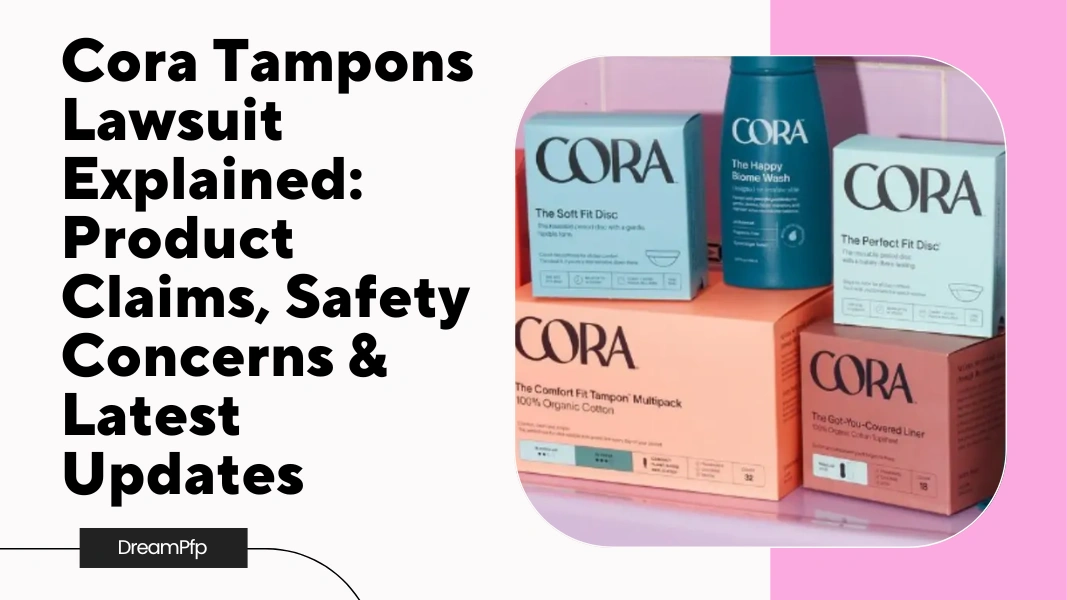
Cora has become a recognized name in the feminine care industry by focusing on organic products, sustainable packaging, and modern menstrual care solutions. However, searches for the Cora Tampons Lawsuit have increased as some consumers discuss concerns related to tampon applicator performance and product usability.
Many customers are looking for answers about whether complaints have resulted in a filed lawsuit, possible settlement, or consumer claims. Questions about product defects, safety concerns, and legal options have become common among people sharing their experiences online.
This article explains the reported concerns, current legal status, consumer discussions, and how product-related claims typically develop. It also separates online complaints from confirmed legal actions so readers can better understand what is known and what remains unverified.
Why Consumers Are Searching for the Cora Tampons Lawsuit
Consumers searching for the Cora Tampons Lawsuit are generally looking for information about reported product issues and whether those complaints have moved into formal legal action. Much of the attention appears connected to discussions about tampon applicator functionality and user experiences.
Online product complaints can attract significant attention, especially when they involve personal care products. Customers often want to know whether other users experienced similar problems and whether a company has addressed those concerns.
Common questions appearing around the topic include:
- Has a lawsuit been officially filed against Cora?
- Are consumers eligible for compensation?
- Is there a settlement or claim process?
- Have the products been recalled?
- Are reported issues related to a confirmed defect?
At this stage, consumer discussions and complaints should be viewed separately from confirmed court proceedings. A group of online reports does not automatically mean a legal case exists.
Product liability lawsuits generally require specific legal claims, evidence of harm, and a formal filing through the court system. Without those steps, concerns remain consumer complaints rather than established legal claims.
What Is Cora and Why Is the Brand Popular?

Cora is a feminine care company known for offering products such as tampons, pads, liners, and other period care items. The brand has built recognition by promoting organic materials, environmentally conscious practices, and products designed around comfort and accessibility.
The company gained popularity among consumers who wanted alternatives to traditional menstrual care brands. Its marketing has focused on ingredient transparency, sustainable choices, and a more modern approach to period products.
Many customers choose Cora products because of factors such as:
- Organic cotton materials
- Simple product design
- Sustainability-focused branding
- Availability through online and retail channels
- Support for menstrual health initiatives
The brand’s growth has also increased public attention when consumers report dissatisfaction with a product experience. For personal care items, even isolated complaints can lead to broader discussions because users often share detailed reviews online.
However, negative reviews or individual reports do not by themselves prove that a product is defective or that a company violated consumer protection laws. Legal conclusions require evidence and official proceedings.
The Applicator Complaints Driving Consumer Concerns
Some consumer discussions related to Cora tampons focus on concerns involving the applicator and ease of use. Reported experiences vary, with some users describing difficulties during application or concerns about how the applicator performs compared with expectations.
Applicator complaints are particularly important in tampon products because the applicator plays a direct role in product delivery and user comfort. If a customer believes the applicator does not function properly, they may question whether the product meets expected quality standards.
Reported concerns discussed by some consumers include:
- Difficulty using the applicator correctly
- Problems releasing the tampon
- Applicator parts not functioning as expected
- Differences between product versions
- Reduced convenience compared with previous experiences
These reports represent consumer experiences and allegations, not confirmed findings of a product defect. A legal claim would typically require evidence showing that a company failed to meet safety, manufacturing, or consumer protection standards.
Cora Tampons New Applicator Controversy Explained
Some online discussions have focused on changes or differences involving Cora tampon applicator designs. Consumers sometimes compare newer versions of products with previous versions and report changes in usability.
When a product design changes, some customers may experience an adjustment period. A feature that works well for one group of users may feel different or less convenient for another group.
Consumer concerns around product redesigns often involve questions such as:
- Was the product change clearly communicated?
- Does the updated design perform as expected?
- Are reported issues isolated or widespread?
- Has the company responded to customer feedback?
At present, discussions about applicator concerns should not be interpreted as proof of wrongdoing. Product complaints can lead to investigations or legal action in some situations, but a formal lawsuit requires an official filing and supporting claims.
Cora Tampons Applicator Not Working Claims
Some consumers discussing Cora tampons online have raised concerns about possible applicator performance issues. These complaints mainly focus on situations where users feel the applicator does not operate smoothly or does not provide the expected level of convenience.
Product performance complaints are common in consumer markets, especially with personal care products where usability is an important part of customer satisfaction. However, a complaint about a product experience does not automatically establish that the product has a manufacturing defect or legal violation.
Reported concerns have included difficulties with:
- Applying the product comfortably
- Releasing the tampon properly
- Using the applicator as intended
- Receiving consistent performance between products
To determine whether these concerns could support a legal claim, investigators would usually examine product design, manufacturing processes, consumer reports, and any evidence of widespread problems.
Difficulty Releasing the Tampon
One concern mentioned by some consumers involves difficulty releasing the tampon from the applicator. Users who experience this issue may feel that the applicator does not work as smoothly as expected.
A properly functioning applicator is designed to help place the tampon correctly and comfortably. When consumers report challenges during this process, they may question whether the product design meets normal expectations.
However, individual experiences can vary based on usage methods, product batches, and personal preferences. A legal claim would require more than isolated complaints and would generally need evidence showing a broader issue.
Applicator Separation
Some online discussions mention concerns about applicator parts separating or not staying together during use. Consumers who report this type of experience may view it as a quality or reliability issue.
In product liability matters, claims involving physical product failures usually depend on evidence such as defective units, manufacturing information, expert evaluations, or documented injuries.
At this time, reported online experiences alone do not confirm that Cora tampons contain a widespread defect or that legal responsibility has been established.
Reduced Ease of Use
Another concern discussed by some customers involves changes in convenience or ease of use. A product may technically function but still receive criticism if consumers believe the design is less comfortable compared with previous versions.
For personal care products, user experience plays an important role in customer satisfaction. Consumers often compare products based on comfort, reliability, and simplicity.
Negative feedback may encourage companies to review product design or customer concerns, but dissatisfaction alone does not necessarily lead to a lawsuit.
Inconsistent Performance
Some consumers have described experiences where product performance appears inconsistent. This may include differences between individual products, packages, or purchases.
Manufacturing-related legal claims usually require evidence showing that inconsistencies result from a defect or failure in quality control. Without official investigations or court filings, these reports remain consumer allegations rather than proven claims.
Consumers experiencing problems may choose to document their concerns, keep product packaging, and contact the manufacturer for assistance.
Has a Cora Tampons Lawsuit Actually Been Filed?
Based on publicly discussed information, there is no confirmed widely reported lawsuit specifically establishing legal claims against Cora related to these tampon applicator complaints.
Consumers frequently search lawsuit-related terms after seeing online discussions, reviews, or social media posts. However, a lawsuit requires an official court filing that identifies the parties, legal claims, and requested remedies.
The difference between a complaint and a lawsuit is important:
| Issue | Meaning |
|---|---|
| Consumer complaint | A customer reports dissatisfaction or a possible product issue |
| Legal claim | A person alleges a company violated a law or caused harm |
| Lawsuit | A formal case filed with a court |
| Settlement | A legally approved agreement resolving claims |
If a formal lawsuit develops in the future, information would typically become available through court records, legal announcements, or official settlement notices.
Until then, consumers should be careful when reviewing online claims and distinguish between reported experiences and confirmed legal developments.
Is There a Cora Tampons Recall?
Consumers searching for information about a possible Cora tampons recall are usually trying to determine whether the reported applicator concerns have resulted in an official safety action.
A product recall is generally issued when a company or regulatory authority identifies a safety concern, manufacturing problem, or risk that requires removing products from the market. A recall is different from customer complaints or negative reviews.
At this time, there is no confirmed public recall information connected specifically to the applicator complaints discussed by consumers. Online discussions should not be treated as evidence of an official recall.
Consumers who are concerned about a product they purchased can take practical steps, including:
- Checking official company announcements
- Reviewing regulatory recall databases
- Keeping product packaging and purchase details
- Contacting the manufacturer with specific concerns
A recall decision typically involves investigation, product testing, and communication between companies and regulatory agencies. Without an official notice, reported product concerns remain separate from a confirmed recall.
What Consumer Reviews Reveal About Product Satisfaction
Consumer reviews provide insight into how customers experience products in real-world situations. For Cora tampons, reviews include a mixture of positive feedback and complaints about different aspects of product performance.
Online reviews can help identify common themes, but they should be interpreted carefully. Individual experiences may differ depending on personal preferences, product versions, and expectations.
Reviews can highlight possible areas of concern, but they do not replace formal testing or legal findings. A collection of negative reviews does not automatically prove that a company has violated consumer protection laws.
Positive Experiences
Many consumers who use Cora products report satisfaction with factors such as comfort, materials, and brand values. Some customers appreciate the company’s focus on organic cotton and environmentally conscious messaging.
Positive reviews commonly mention:
- Comfortable product design
- Brand transparency
- Availability in stores and online
- Preference for organic materials
- Satisfaction with overall performance
These experiences show that consumer opinions can vary significantly. While some users report problems, others continue to use and recommend the products.
Negative Experiences
Some customers have shared negative experiences involving product usability and applicator performance. These complaints often focus on convenience, ease of use, or differences compared with other tampon brands.
Negative reviews may include concerns such as:
- Applicator difficulty
- Product handling issues
- Frustration with design changes
- Expectations not being met
However, negative reviews alone do not establish legal liability. For a product lawsuit to move forward, claims generally require evidence connecting the alleged issue to measurable harm or a legal violation.
What Reddit Discussions Say About Cora Tampons
Reddit discussions often become a place where consumers share personal experiences with products, including feminine care items. Some users may discuss concerns about Cora tampons, product changes, or comparisons with other brands.
These discussions can help identify recurring customer opinions, but they are not official legal records. Reddit comments represent individual experiences and may include incomplete or unverified information.
When reviewing online discussions, consumers should consider:
- Whether multiple sources describe similar experiences
- Whether claims are supported by evidence
- Whether the information comes from official sources
- Whether a legal filing actually exists
Social media conversations can sometimes draw attention to potential product issues, but they do not determine whether a lawsuit has legal merit.
Could Applicator Complaints Lead to Future Litigation?
Consumer complaints about a product can sometimes become the starting point for legal investigations. However, not every complaint develops into a lawsuit.
For applicator-related concerns to potentially support litigation, several factors would usually need to be examined, including whether there is a consistent defect, whether consumers suffered harm, and whether the company failed to meet legal obligations.
Future legal action could depend on:
- The number of documented complaints
- Evidence of a recurring product issue
- Expert reviews or testing results
- Consumer damages or injuries
- Company response to reported concerns
At present, complaints and discussions about Cora tampons do not confirm that future litigation will occur. Legal outcomes depend on evidence, applicable laws, and formal court processes.
How Consumer Product Lawsuits Typically Develop
Consumer product lawsuits usually follow a series of steps before reaching a court decision or resolution. A product complaint may begin with individual reports, but moving from consumer dissatisfaction to legal action requires evidence, investigation, and formal procedures.
Not every product complaint becomes a lawsuit. Many concerns are resolved through customer service responses, product improvements, refunds, or company investigations.
The typical process may include the following stages:
Initial Complaints
The first stage often begins when consumers report problems with a product. These reports may appear through customer reviews, direct complaints to the company, regulatory reports, or online discussions.
During this stage, consumers may document issues such as:
- Product performance problems
- Possible safety concerns
- Unexpected product failures
- Financial losses or damages
A collection of complaints may attract attention, but complaints alone do not establish legal responsibility. They must usually be reviewed to determine whether there is a consistent pattern.
Investigation Stage
If concerns continue, an investigation may examine whether there is evidence of a broader product issue. This process can involve reviewing customer reports, product samples, manufacturing information, and expert opinions.
Investigations may help determine:
- Whether a product defect exists
- Whether the issue affects many consumers
- Whether consumers experienced actual harm
- Whether company actions contributed to the problem
Without supporting evidence, allegations may not develop into a formal legal case.
Potential Filing
If attorneys or affected consumers believe there is sufficient evidence, they may decide to file a lawsuit. A filing would normally identify the legal claims, parties involved, and requested compensation or remedies.
A filed case does not mean allegations have been proven. Courts review evidence from both sides before reaching any legal conclusion.
Discovery Process
If a lawsuit moves forward, discovery allows both parties to exchange relevant information. This stage can involve documents, expert analysis, company records, and witness testimony.
Discovery may help clarify:
- How the product was designed
- Whether quality checks were followed
- How complaints were handled
- Whether consumers suffered measurable harm
Many legal disputes are resolved during or after this stage.
Resolution
A product lawsuit may end through several outcomes, including settlement, dismissal, or a court decision. A settlement may provide compensation or other remedies without requiring a full trial.
The final result depends on the evidence presented, legal arguments, and decisions made through the court process.
What Consumers Should Do If They Experience Product Issues
Consumers who experience problems with Cora tampons or any personal care product can take steps to document their experience. Proper records can be useful if they need to communicate with the manufacturer, report concerns, or participate in future legal actions.
Helpful steps may include:
- Keeping the product packaging and lot information
- Saving receipts or purchase records
- Taking photos of product issues when possible
- Writing down details about what happened
- Reporting concerns directly to the company
Consumers should avoid assuming that an online complaint automatically means a lawsuit exists. Instead, they should rely on verified information from official sources, court records, or regulatory announcements.
If a consumer believes they experienced harm, they may also consider discussing their situation with a qualified legal professional. Legal options depend on individual facts and applicable laws.
The Difference Between Product Complaints and Proven Defects

Understanding the difference between complaints and proven defects is important when evaluating any product-related controversy.
A consumer complaint represents an individual’s experience or concern. A proven defect requires evidence showing that a product has a problem affecting safety, performance, or compliance with legal standards.
The distinction can be explained as follows:
| Term | Meaning |
|---|---|
| Consumer complaint | A report from a customer describing a problem or dissatisfaction |
| Alleged defect | A claimed product issue that has not been legally proven |
| Confirmed defect | A problem supported by investigation or official findings |
| Lawsuit | A formal legal process where claims are reviewed by a court |
In discussions about the Cora Tampons Lawsuit, it is important to separate reported experiences from confirmed legal findings.
Online reviews, social media posts, and community discussions can highlight concerns, but they do not determine whether a company is legally responsible.
Current Status of the Cora Tampons Lawsuit Discussion
The current discussion surrounding the Cora Tampons Lawsuit appears to focus mainly on consumer complaints and questions about applicator performance. At this time, reported concerns should be distinguished from confirmed court proceedings.
There is no confirmed publicly established settlement, compensation program, or court judgment related specifically to these applicator complaints based only on available discussion.
Consumers following this topic should watch for verified updates, including:
- Official company statements
- Regulatory announcements
- Court filings
- Settlement notices
Legal claims can change over time if new evidence becomes available or if consumers take formal legal action. Until then, online discussions remain separate from proven legal outcomes.
Read: Fischer Homes Lawsuit 2026
Read: Generational Equity Lawsuit 2026
Read: Venmo Class Action Lawsuit
Read: Trellis Law
Read: CNLawBlog
Frequently Asked Questions
Is there a lawsuit against Cora tampons?
No confirmed lawsuit has been publicly established specifically related to the applicator complaints discussed by consumers. Online complaints and legal filings are different, and a formal lawsuit requires a court filing with specific claims.
Are Cora tampons recalled?
There is no confirmed recall information connected specifically to the reported applicator concerns. Consumers should check official sources and regulatory announcements for any verified recall updates.
What complaints have consumers reported about Cora tampons?
Some consumers have discussed concerns involving applicator usability, product handling, and performance differences. These reports represent individual experiences and do not prove a widespread product defect.
Can consumers receive compensation from Cora?
Compensation is generally available only through official settlements, court-approved claims, or other legal processes. Without a confirmed lawsuit or settlement, there is currently no established claim process.
What should customers do if they experience a product problem?
Customers should keep purchase information, packaging details, and records of their experience. They can also contact the company and follow official updates regarding any future legal developments.
Has Cora responded to these complaints?
Consumers should rely on official company communications for confirmed responses. Online discussions may include opinions and reports that are not verified statements from the company.
Can product complaints become a class action lawsuit?
In some situations, multiple consumer complaints may lead attorneys to investigate possible legal claims. However, a class action requires court approval and evidence showing that legal requirements are met.
Final Thoughts
The discussion surrounding the Cora Tampons Lawsuit is primarily connected to consumer concerns about applicator performance and product experiences. While some users have shared complaints online, those reports do not automatically establish that a defect exists or that legal wrongdoing occurred.
A confirmed lawsuit, settlement, or recall would require official documentation such as court filings, regulatory announcements, or company statements. Consumers should carefully separate online discussions from verified legal developments.
Anyone experiencing product issues should document their experience, keep relevant purchase details, and follow reliable sources for updates. Like any consumer product dispute, the outcome depends on evidence, legal review, and official decisions rather than online claims alone.
